Massachusetts - School-Age
Massachusetts
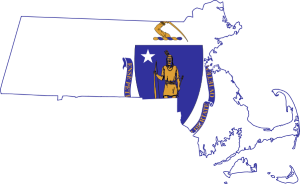
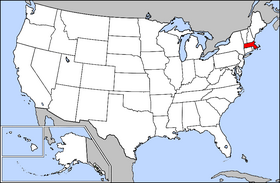
6th State (February 6, 1788), New England
State Abbreviation: MA
Capital: Boston
Origin of name: From Massachusetts tribe of Native Americans who lived in the Great Blue Hill region, south of Boston. The Indian term means "at or about the Great Hill".
Motto: Ense petit placidam sub libertate quietem (By the sword we seek peace, but peace only under liberty)
Nickname: Bay State, Old Colony State, Puritan State, Baked Bean State.
Massachusetts State Symbols
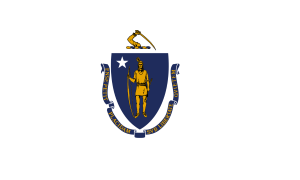
Massachusetts: Great Seal
Bean: Navy Bean
Berry: Cranberry
Beverage: Cranberry Juice
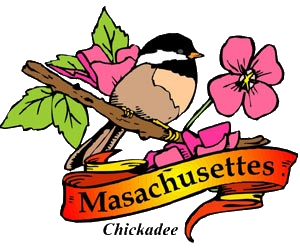
Bird: Black-Capped Chickadee
Building Rock and Monument Stone: Granite
Cat: Tabby Cat (Felis familiaris)
Ceremonial March: The Road to Boston
Cookie: Chocolate Chip Cookie
Dessert: Boston Cream Pie
Dog: Boston Terrier
Explorer Rock: Dighton Rock
Fish: Cod
Flower: Mayflower
Folk Dance: Square Dance
Folk Hero: Johnny Appleseed
Folk Song: Massachusetts, words and music by Arlo Guthrie
Fossil: Theropod Dinosaur
Game Bird: Wild Turkey
Gem: Rhodonite
Glee Club Song: The Great State of Massachusetts
Historical Rock: Plymouth Rock
Horse: Morgan Horse
Insect: Ladybug
Marine Mammal:: Right Whale (Eubabalena Glacialis)
Mineral: Babingtonite
Muffin: Corn Muffin
Ode of the Commonwealth: Ode to Massachusetts
Patriotic Song of the Commonwealth: "Massachusetts (Because of You Our Land is Free)", words and music by Bernard Davidson
Poem: Blue Hills of Massachusetts (includes State Seal of MA.)
Rock: Roxbury Puddingstone
Shell: New England Neptune
Soil: Paxton Soil Series
Song: Song: All Hail To Massachusetts
Tree: American Elm
Video
Things to Know
The Pilgrims left Europe in 1620 to seek religious freedom. They made a treacherous voyage across the Atlantic Ocean on a ship called the Mayflower. The Mayflower was named after a flower known as "Trailing Arbutus," an evergreen with a white flower that has a pink center. The Pilgrims established their settlement at Plymouth, MA in 1620.
They were followed shortly by the Puritans, who established the Massachusetts Bay Colony. The Puritans named their colony after a local Indian tribe whose name means "a large hill place." The birthplace of many of the ideals of the American Revolution, Massachusetts attracted people who believed in self-government.
Massachusetts became a leader in resisting British oppression. In 1773, the Boston Tea Party protested unjust taxation. The Minute Men started the American Revolution by battling British troops at Lexington and Concord on April 19, 1775.
Massachusetts produces the nation's largest cranberry crop.
Fenway Park in Boston, Massachusetts opened on April 20, 1912 and is major league baseball's oldest ballpark.
Massachusetts is home to 150 public and private institutions of higher learning and is recognized worldwide for its academic heritage and reputation. Some of the well-known ones are Harvard, MIT, Holy Cross, Tufts, Boston College, Boston University, and the University of Massachusetts.
Major Rivers: Charles River, Connecticut River, Hoosic River, Housatonic River, Merrimack River.
Presidents From Massachusetts
John Adams (1735 - 1826), 2nd President of the United States.
John Quincy Adams (1767 - 1848), 6th President of the United States.
Son of John Adams (2nd U.S. President)
Calvin Coolidge (1872-1933 ), 30th U.S. President
John F. Kennedy (1917-1963), 35th president of the United States.
George H. W. Bush (1924-2018 ), 41st U.S. President, Milton, Massachusetts.
Famous Bay Staters
Samuel Adams (1722 - 1803), American Revolutionary patriot and statesman, signer of the Declaration of Independence, and governor of Massachusetts.
Benjamin Franklin, (1706 - 1790), printer, author, philosopher, diplomat, scientist, and inventor.
John Hancock (1737 - 1793), merchant, statesman, first signer of the Declaration of Independence, and first governor of the state of Massachusetts.
Nathaniel Hawthorne (1804 - 1864), novelist.
Paul Revere (1735 - 1818), silversmith and patriot.
Henry Wadsworth Longfellow (1807 - 1882), poet.Read the poem "The Midnight Ride of Paul Revere" by Longfellow.
Henry David Thoreau (1817 - 1862), essayist, naturalist, and philosopher.
Clara Barton (1821-1912), American Red Cross founder.Emily Dickinson (1830 - 1886), poet.
Louisa May Alcott (1832-1888), writer
Virtual visit of Orchard
House the home of the Alcott family.
Susan B. Anthony (1820-1906), woman suffragist
The Midnight Ride of Paul Revere Video
Things to Do
Poem: Blue Hills of Massachusetts (includes State Seal of MA.)
Massachusetts State Bird and State Flower color page
Massachusetts Flag Map color page
Make a Hornbook
The Pilgrims taught young boys and girls to read using hornbooks.
How to Make a Hornbook.
Sites to See
Plimoth Plantation - Kids Section
Read The Ladybug Story
The true tale of how a group of school children used the legislative process to make the ladybug the Official Bug of the State of Massachusetts.
Boston Cooking School Cook Book
Lots of old-time recipes from Fannie Farmer, published in 1918.
The Making of the Modern American Recipe - Smithsonian Magazine